payments
•fintech
•trends
How to Choose a Payment Orchestration Platform: A Practical Guide for 2027
Payment orchestration platforms have fast emerged as an important part of many payment processing firms’ tech stacks.
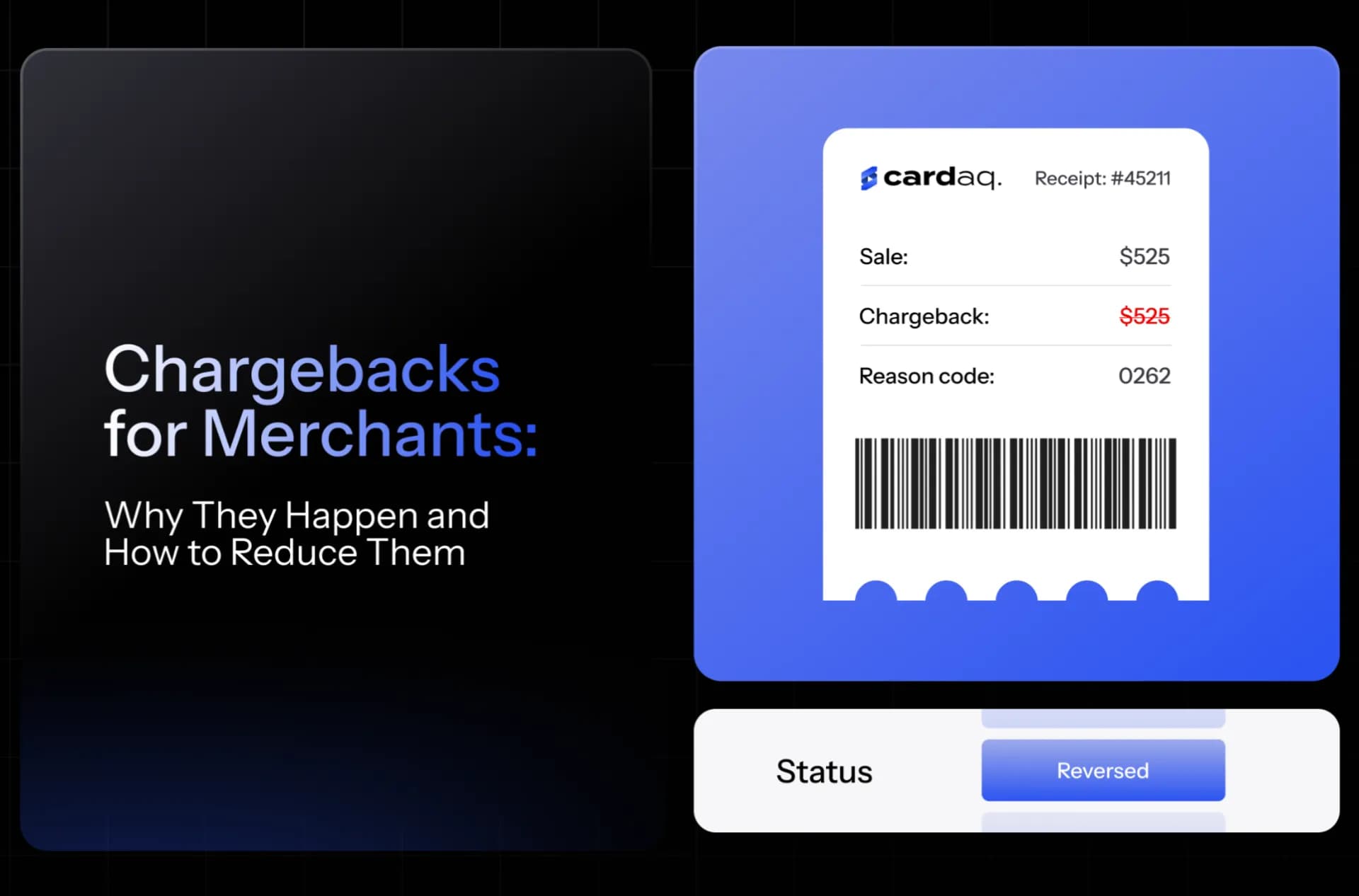
For merchants, a successful payment doesn’t always mean the money is theirs to keep. Weeks after a transaction, a customer can dispute the charge with their bank, triggering what's known as a chargeback. The result? Potentially lost revenue, additional costs and an administrative headache that can take weeks to resolve.
But not every chargeback is fraudulent. Some involve genuinely unauthorised transactions, while others stem from delivery problems, confusing subscription terms or customers who simply don't recognise a payment.
Understanding these distinctions is essential to chargeback prevention. To know how to reduce chargebacks, you have to understand why they happen.
A chargeback is a mechanism through which a cardholder can dispute a card payment with their issuing bank and seek to have the transaction reversed. Chargebacks provide important consumer protection, particularly where transactions are unauthorised or goods aren't delivered.
Unlike a conventional refund, which the merchant normally initiates, a chargeback involves the customer’s issuing bank, or issuer. The merchant’s acquiring bank or payment provider, known as the acquirer, typically communicates the dispute and coordinates the merchant's response.
Merchants may be able to challenge a chargeback by submitting supporting evidence, a process known as representment. The outcome depends on the circumstances, applicable card network rules and evidence provided.
According to Mastercard’s 2026 research with Datos Insights, an estimated 286 million chargebacks are expected globally in 2026, rising to 359 million annually by 2029.
Mastercard estimates that each chargeback costs US merchants an average of $128 in third-party fees and internal costs. Chargebacks can also create administrative work and disrupt payment operations.
Understanding common chargeback reasons helps merchants distinguish between genuine customer complaints, criminal fraud and potentially preventable operational problems.
Unauthorised transactions: Criminals use stolen payment credentials to make purchases that the legitimate cardholder subsequently disputes.
Goods or services not received: An order fails to arrive, delivery is delayed or a purchased service isn't provided.
Products not as described: Goods are defective, incorrect or materially different from what was advertised.
Processing errors: Duplicate charges, incorrect amounts or unresolved refunds trigger complaints.
Subscription misunderstandings: Customers overlook renewal terms, forget a subscription or encounter difficulties cancelling.
Customer dissatisfaction: Poor communication or unresolved complaints prompt customers to contact their banks rather than the merchant.
Merchant chargebacks don’t all have the same cause, so they shouldn't all receive the same response.
One particularly challenging category is friendly fraud, sometimes called first-party fraud or first-party misuse. This involves a cardholder disputing a legitimate transaction.
According to Mastercard’s 2026 research, approximately one in five disputes is associated with first-party fraud. Meanwhile, the Merchant Risk Council’s 2025 Global Fraud and Payments Report shows that six in ten merchants reported increasing rates of first-party misuse.
Some cases involve deliberate misuse or chargeback fraud, such as falsely claiming that purchased goods never arrived. Data from Ravelin shows 37% of UK shoppers admitted to exploiting returns policies, illustrating the wider problem of first-party abuse beyond chargebacks.
Others arise from genuine confusion about a payment. Importantly, merchants shouldn’t assume that every disputed legitimate transaction involves dishonest intent.
Consider a customer who subscribes to an online service but doesn’t recognise the company’s trading name on their bank statement. Believing the payment is unauthorised, they contact their bank instead of the service provider. The transaction may be legitimate, but the dispute can still create costs and administrative work.
This is why recognisable billing descriptors - the merchant names appearing on customers’ statements - matter. Clear purchase confirmations, renewal reminders and accessible customer support can also prevent confusion from escalating into payment disputes.
Effective chargeback management starts long before a customer contacts their bank. Merchants should examine the entire customer experience, from checkout through to delivery, billing and after-sales support.
Set clear expectations: Accurate product descriptions, transparent pricing and realistic delivery information reduce the likelihood of customers feeling misled.
Make refunds and cancellations straightforward: Customers should understand the applicable terms and know how to request a refund or cancel a subscription. Complicated processes can encourage avoidable disputes.
Make transactions recognisable: Use clear billing descriptors and provide confirmations showing what was purchased, when and from whom.
Communicate proactively: Delivery updates, subscription notifications and prompt responses to complaints can resolve uncertainty before customers approach their banks.
Strengthen fraud controls: Appropriate authentication, transaction monitoring and risk-based fraud detection can help identify suspicious activity before payment completion.
Investigate operational problems: If disputes repeatedly involve one product, courier or subscription plan, the underlying cause may lie outside the payment process.
For example, an online retailer experiencing repeated non-delivery disputes might discover that complaints are concentrated around a particular delivery partner.
Payment authentication plays an important role in payment fraud prevention, particularly for online transactions.
EMV 3-D Secure (EMV 3DS) allows transaction and device information to be exchanged to support cardholder authentication. Combined with appropriate fraud detection and risk scoring, authentication can help identify potentially unauthorised payments while limiting unnecessary friction for legitimate customers.
However, authentication doesn't guarantee protection against chargebacks. A successfully authenticated payment may still be disputed because goods weren't delivered or a service wasn’t provided.
Under certain circumstances, authentication can affect liability for fraud-related disputes. Merchants should understand the applicable network rules rather than assuming 3D Secure eliminates chargeback exposure.
When a dispute arises, chargeback evidence matters. Accurate records can help merchants investigate payment disputes and support a properly evidenced response.
Merchants should retain relevant order details, transaction records, delivery confirmations, customer communications, refund information and available authentication records.
For example, a merchant challenging a claim that goods never arrived may be able to provide delivery records showing when and where the order was delivered, while a subscription dispute could require purchase confirmation, applicable terms and customer communications.
Card networks have specific evidence requirements and response deadlines. Merchants should work with their payment providers to understand what information is required and when it must be submitted.
Good record-keeping doesn’t guarantee successful representment, but it supports a properly evidenced response.
A headline chargeback rate can reveal that something is wrong. But effective chargeback reporting and analytics should also help merchants understand why disputes occur and what they can do about them.
More useful insights come from analysing disputes by reason code, geography, payment method, card type, customer segment, product or service, and recurring versus one-off transactions.
Consider a subscription business experiencing a rise in disputes. If chargebacks cluster around the first payment after a free trial, the merchant might investigate whether renewal terms and notifications are sufficiently clear.
Similarly, increased non-delivery disputes in one region could indicate fulfilment problems, while a concentration of unauthorised-transaction claims may warrant closer examination of fraud controls.
Chargeback reason codes - the categories payment networks use to classify disputes - provide useful starting points for investigating the underlying causes. But merchants should also examine customer communications and operational records to understand what’s driving those disputes.
The real value of chargeback monitoring is turning those findings into action, whether that means clearer billing, better delivery processes, stronger authentication or more responsive customer service.
Chargebacks are an important consumer protection mechanism, and no merchant can eliminate them entirely. But distinguishing legitimate complaints, unauthorised transactions and preventable customer confusion gives businesses a better basis for reducing unnecessary disputes.
Effective prevention combines secure payment processing, appropriate fraud controls, transparent communication and reliable operational practices.
Get in touch with Cardaq to learn more about its card acquiring services for eligible merchants.
AUTHOR

Cardaq Team
23 October, 2026