fintech
•transactions
•trends
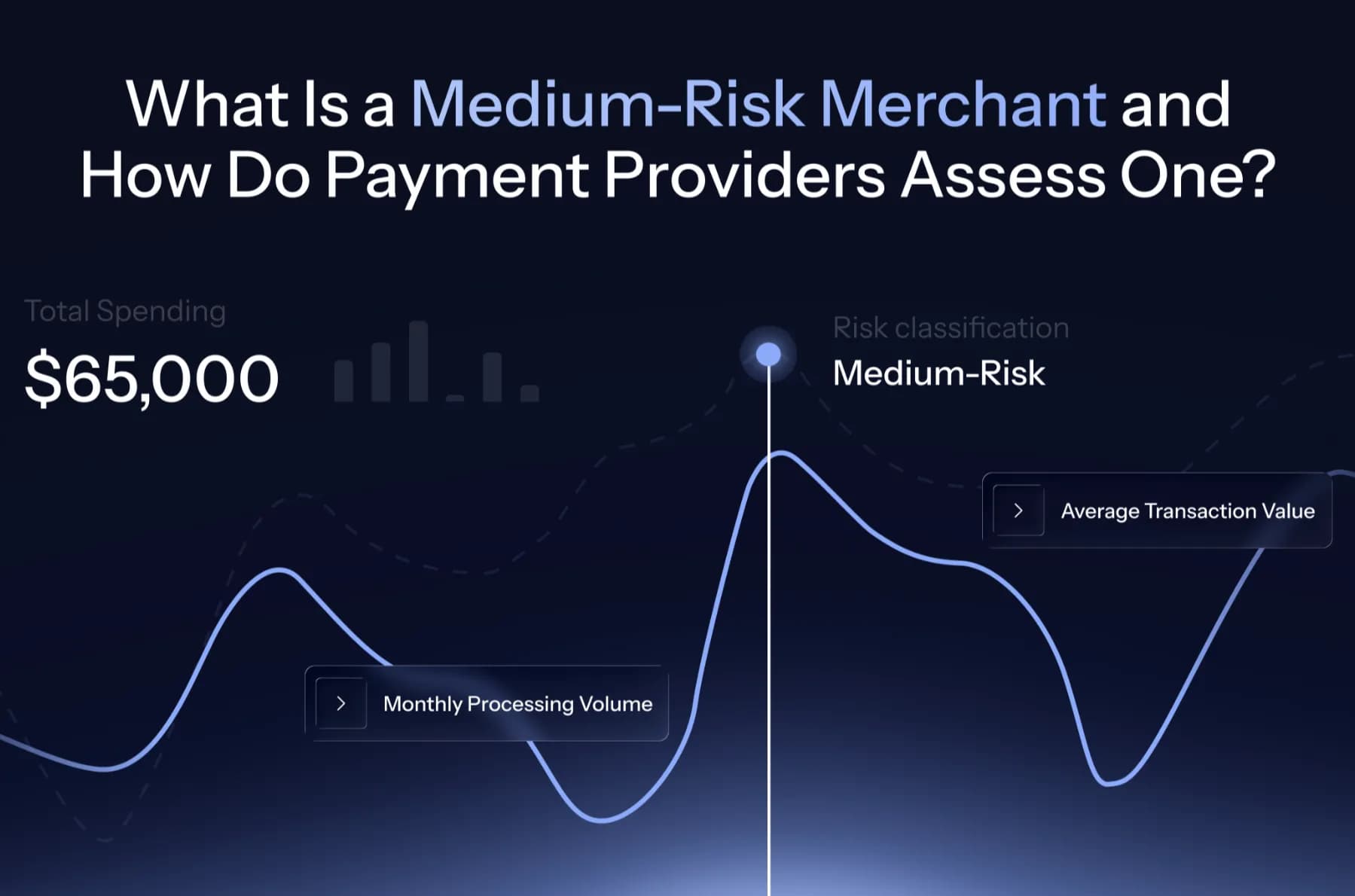
What Is a Medium-Risk Merchant and How Do Payment Providers Assess One?
A medium-risk merchant is a business that is neither low risk nor high risk, but has a medium risk profile.

Following Cardaq’s sponsorship of this year’s Innovative Payments Conference, hosted by the Innovative Payments Association, we spoke with Brian C. Tate, President and CEO of the IPA, and Hugo Remi, CEO of Cardaq Group, about the event, the themes shaping the payments industry and the importance of continued dialogue between businesses, regulators, policymakers and wider stakeholders.
Q: Brian, at a high level, how do you feel the conference went this year?
Brian Tate: This year’s Innovative Payments Conference was among the best conferences the IPA has ever held. We were fortunate to have outstanding speakers, presentations and audience interaction throughout the event.
Our featured keynote speakers were also exceptional. From OMB Director Russ Vought to Comptroller Gould, David Wasserman and Adam Frankel, we were able to put on a first-class show for our attendees.
Q: What role do events like this play for the IPA and its members?
Brian Tate: Events such as the Innovative Payments Conference serve several important purposes.
First, they give the IPA community an opportunity to come together, reconnect, learn from each other and identify shared priorities. Just as importantly, they provide a forum for members to hear directly from the regulators and policymakers whose decisions have a direct impact on our industry.
Our members are focused on running their businesses and serving their customers, so it is not always easy for them to keep up with every development in the regulatory environment. The conference gives them a way to get ahead by hearing from people on the ground in Washington, DC.
Q: Hugo, why was it important for Cardaq to support the conference as a sponsor?
Hugo Remi: For Cardaq, supporting the Innovative Payments Conference was about contributing to a wider industry conversation, I was a member of the IPA since the 2018 and always was very proud of it. I feel that I need to be more active member, because I can see what my contribution can bring to the association and the United States.
Payments is a highly competitive sector, but there are areas where the industry needs to come together. Regulation, trust, fraud prevention and resilience all require serious discussion between payment companies, associations, regulators and policymakers.
By supporting the conference, Cardaq and I was able to play a part in creating that space. We see our role as an active participant in the payments ecosystem, not just as a business operating within it and as the active supporters of the country to make it great and leading country in the world.
Q: Brian, what were the broad themes or priorities that stood out across the event?
Brian Tate: Several themes came through strongly.
Q: Hugo, what were your main reflections from the event?
Hugo Remi: My main reflection was that the payments industry is moving quickly, but it is also becoming more complex. There is a massive gap between the market speed and the government. Unfortunately, a lot of issues which arise in the financial markets are not always caused because of someone’s failures or fraud, but because the regulations can’t be as active as the business, but it should.
There is a lot of innovation in the market, but innovation alone is not enough. The sector also needs trust, clear engagement with regulators and practical collaboration between different parts of the ecosystem. We need to be friend and business partners but not stand in different sides of the river. Conversation and support are the rule.
Events like this are valuable because they bring those conversations together. They allow companies to understand what others are seeing, where the pressure points are and where the industry may need to work more closely.
But it is also the great honour to listen and meet such speakers, it was a great honour for me and I want once again say thank you to our Chairman Brian.
Q: Why is it important for the payments industry to create spaces where members, partners and wider stakeholders can exchange views?
Brian Tate: The payments market is highly competitive, with players of all shapes and sizes competing for consumer attention. However, one reason trade associations such as the IPA exist is to bring members together to work on common issues and concerns.
One of the IPA’s goals is to help create a regulatory landscape that is fair to consumers and the industry. That allows us to take a step back and let our members compete.
To reach that goal, it is critically important that the payments community forms reasonable solutions and takes principled positions that can be conveyed with one voice to policymakers.
Q: Hugo, from Cardaq’s perspective, why is collaboration so important in areas such as trust, resilience and fraud prevention?
Hugo Remi: Fraud prevention is a good example of why collaboration matters. I have in mind to open one project with one US government agency, with whom I already talked briefly, I can’t disclose any other details now, but that is exactly goes to the point of fraud.
Fraud does not sit neatly inside one company, one bank or one platform. It moves across the ecosystem. That means the response also has to be coordinated. No single business can solve the issue alone.
The same is true for trust and resilience. Customers, merchants, regulators and partners all need confidence that the payments system is secure, responsive and responsible. That confidence is built when the industry works together, shares perspectives and develops practical solutions.
Q: Brian, how do sponsors such as Cardaq help support the IPA’s work and the wider objectives of the association?
Brian Tate: Every trade group is sustained by its members. The IPA is no different.
Our members are the reason we exist, and without their support we would not be able to perform the work we do on their behalf. Financial and other in-kind support from companies such as Cardaq is essential for the association to reach its goals.
That support widens the scope of issues we can work on. It also allows us to travel, attend conferences and host events beyond the Innovative Payments Conference, such as our annual Compliance Boot Camp.
Q: Hugo, how does participation in events like this support Cardaq’s wider role in the payments ecosystem?
Hugo Remi: Participation in events like this helps Cardaq stay close to the issues shaping the industry.
We want to be part of the conversation on how payments develops responsibly. That means listening, contributing and building relationships with the organisations and people who are influencing the direction of the sector.
I still want to be a businessman, politics is not for me, but I want honestly help the country, people and other businesses so we can live and prosper together, as it is a win-win story. That is why I am trying to do my best.
For Cardaq, industry engagement is not separate from our work. It is part of how we build trust, understand the market and support better outcomes for businesses and consumers.
Q: Brian, looking ahead, where do you see continued industry dialogue being most important?
Brian Tate: I am looking closely at the autumn elections and the impact they may have on how Congress legislates, as well as the issues regulators decide to address in 2026.
There is a possibility of political change in the House and Senate, which could affect the national agenda, the country’s finances and the leadership of key committees, including the House Financial Services Committee and the Senate Banking Committee.
These expected changes mean the payments community must continue to work together so it is prepared to engage directly with whichever party is leading the country heading into 2027.
Q: Hugo, what would you like to see more of from industry forums and associations over the coming year?
Hugo Remi: I would like to see continued focus on practical discussion. Not the theories. I am the man who is very direct and always goes straight to the business.
The industry does not need conversation for its own sake. It needs forums that help companies, associations, regulators and policymakers understand the challenges clearly and work towards solutions that can actually be implemented.
We need each time to build the action plans and at the next events, see and discuss jointly what we have managed to achieve.
Let’s stop wasting time and start finally doing the things.
That will be especially important in areas such as fraud prevention, regulatory change, new payment technologies and customer protection. These are not issues that can be solved in isolation.
Q: Finally, if you had to summarise the value of the conference in one sentence, what would it be?
Brian Tate: The conference brought the payments community together to learn, exchange views and prepare for the regulatory and commercial changes shaping the industry.
Hugo Remi: For me, the value was in being part of a serious industry conversation and to provide the support to the association to give the opportunity for other people, financial professionals and government to see each other and speak with each other.
Of course from professional point of view, I have learned a lot too.
AUTHOR

Cardaq Team
18 May, 2026