5 mins read
Cardaq Team
Feb 20, 2026
trends
•social media
•youth
Managing Expectations With A Shared Calendar
Your shared calendar is the key to relationship peace. Learn how syncing schedules stops financial surprises and saves date night.
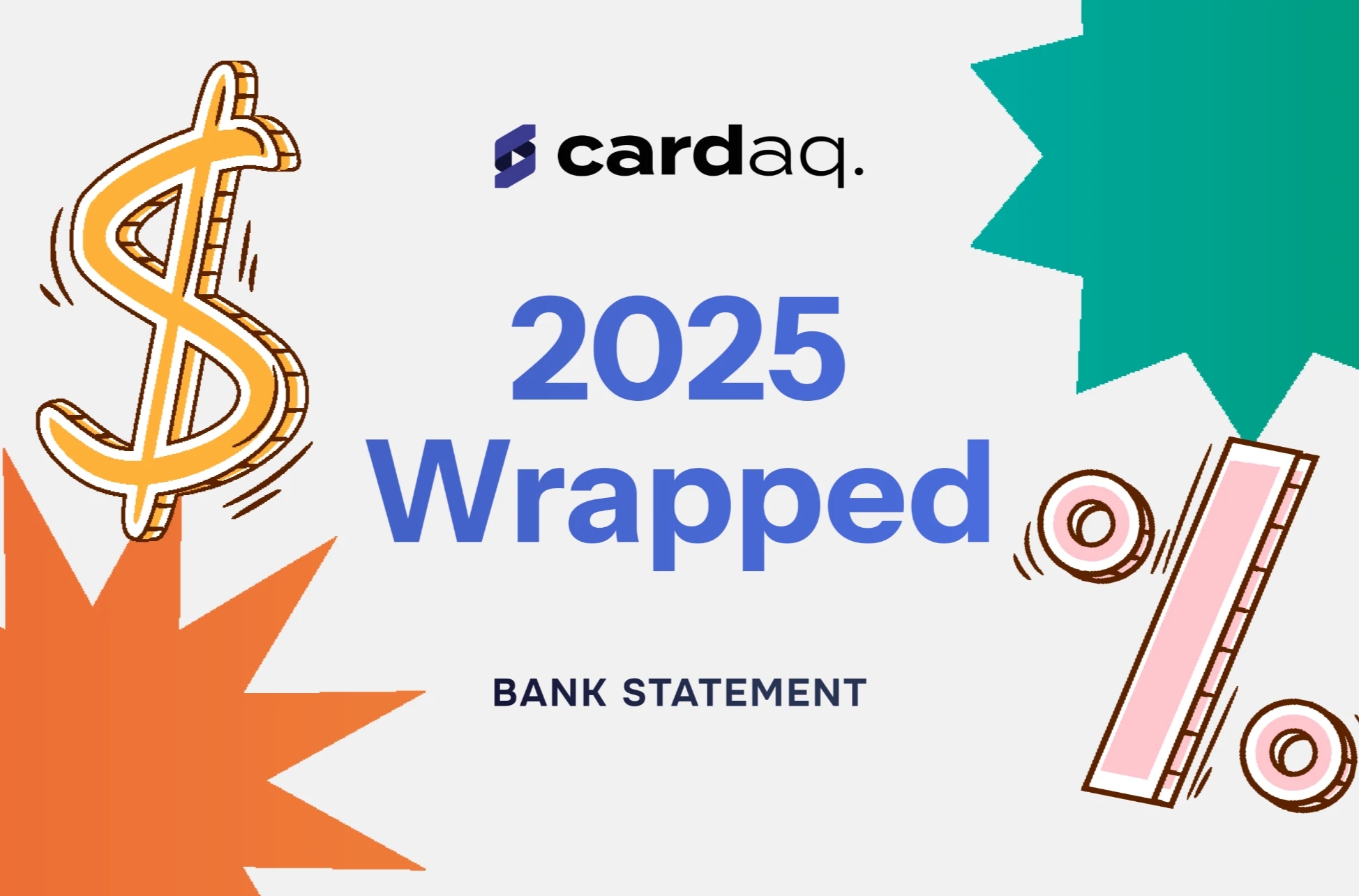
Imagine if your spending got the Wrapped treatment. We designed a tool that turns your transaction history into shareable data stories.
Cardaq Team
Feb 20, 2026
Spotify Wrapped is a fun but insightful occasion when we learn a bit more about everyone’s audio tastes. The platform creates fun visualisations of users’ music and podcast trends, compiling these to give insights such as most listened to artist, fav album and must-have podcast. We get to see, via a few swipes, a colourful breakdown of our past year on Spotify and then we can share these on social media with friends. This is part of the social aspect of Spotify which has helped make it such a massive platform with millions of users.
However, what if we could do the same with our finances?
A lot of fintechs solutions will offer insights into spending and investment patterns. But none go as far, or as loud, as Spotify does with our music. This could be a great way of visualising our relationship with money and go a long way towards demystifying it.
Finance is often a source of stress for people because they don’t understand it. This is a world shrouded with acronyms and jargon which can all be very confusing, when in reality it’s quite simple. But if people were armed with better insights and a clearer, simpler understanding of how their money worked then logic suggests they would be better placed to get started improving their situation.
A financial “unwrapped”
Hypothetically, a financial unwrapped could look like this: you go to your most used fintech app, a money management solution or bank. This has a new notification for you to open, your first financial unwrapped! Using API technology this has sourced data from across your financial and digital footprint and created a bespoke visualisation of your financial year.
Like the way Spotify Unwrapped begins with how many hours (or days and weeks!) of music you’ve listened to, your financial unwrapped would start with the big numbers. How much income have you received and from what sources? And then, on the flipside, how much have you spent? This would initially give you a very simple but important metric – are you in profit?
Then the financial unwrapped would go deeper and break down how you’ve spent your money. This would be segmented into needs and wants – with the former comprising of how much you’re paying on utilities, rent, food and so forth. The latter would be the stuff we buy but don’t need – dinners out, holidays, designer clothes etc. This could all easily be further refined into categories and then further sub-categories. In the same way a Spotify Unwrapped identifies your favourite artists and podcasts, the same could be done for your most used merchants.
Then, once you have this data, you could start to use it.
The importance of financial insights
Spotify Unwrapped is just a bit of fun, and doesn’t come with any judgement (except what your friends may think about your taste in music). Though a financial unwrapped wouldn’t pass any judgement on your finances it could be invaluable to helping to improve your financial situation.
The current cost of living crisis makes it very hard to save money, and to some extent there isn’t much we can do about the cost of some things – such as heating – being increased by inflation. However, many of us don’t realise that by making a few tweaks to our ongoing financial behaviour and how we spend our money, we can make a difference.
Exploring your current fintech apps’ insights can be extremely helpful for this and if you can get a fuller understanding of your finances, here
are simple ways to improve things:
· Spring clean your direct debits. Check to see if there are any costly and unused subscriptions you can cancel (gyms, websites, newspapers, etc) that can be culled.
· Consolidate your debts. Some of your direct debits may be regarding credit cards or loans you’ve taken out – take control of these and explore debt consolidation, or even 0% credit card, options that could help you pay off debt more efficiently and less expensively.
· Block notifications and emails from your favourite shops. Spending too much on certain merchants? Give yourself some distance and do what you can to ignore their offers and discounts.
· Eat in more. Eating out is great fun, but if you’re spending a lot on meals out then add up how much you could save by cooking at home instead. You can still eat great, tasty food but do so with less impact on your finances.
· Use online shopping. Shopping regularly online with a chosen supermarket is not only very efficient, but means you avoid the sights and sounds of being in a shop and depending on some chains you can gain loyalty points over time.
· Sell your unwanted items. Every time you buy something, make an effort to sell something – second hand and digital thrift apps have exploded in recent years, making it even easier to declutter while turning a profit.
· Take a breath. Impulse online buying is extremely handy, especially with next day delivery now the norm, but the costs stack up. Next time you’re about to make a purchase, take time before completing the transaction – from an hour to a night’s sleep – and see if you really need to make that purchase.